

Leaders and individual contributors face different mental health challenges.
Loneliness, anger, sadness, and stress are more common among leaders. And although engagement and life-satisfaction may also be higher, leaders are less likely to experience a large amount of enjoyment or laughter on any given day.
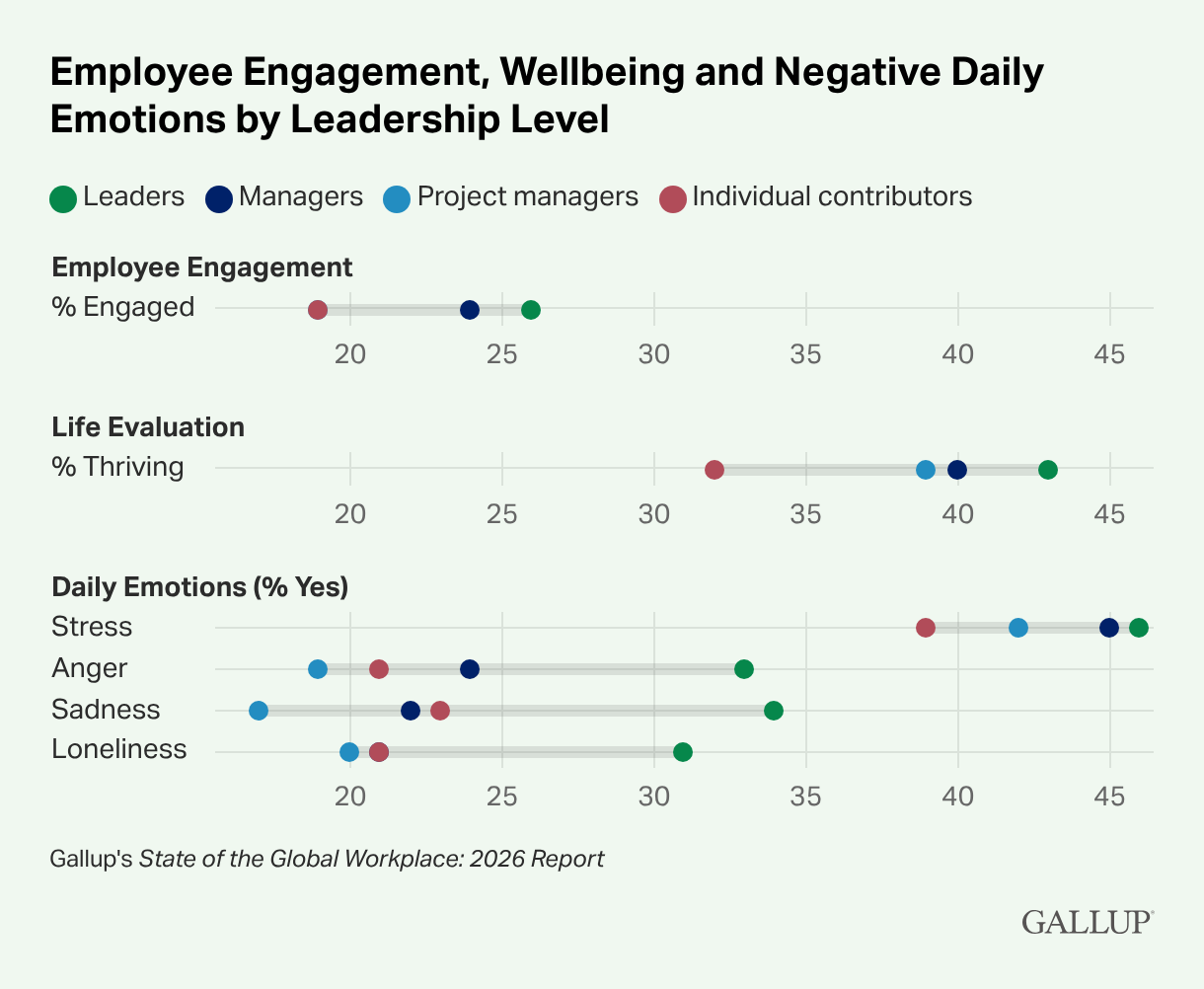
Gallup summarized this finding in their 2026 State of the Global Workplace report with this phrase: “leaders have higher life evaluations but worse days than those they lead.”
That’s not to say that leaders are crushing it. 57% of leaders are not thriving. And a 26% engagement rate is a major cause for concern.
The question we’ve often asked is “what actions should leaders take to improve employee mental well-being?”
And while we desperately need to solve that problem, we also need to ask the sister question: “What can we do to improve mental health in leaders?”
In this twice-weekly series, I’ll be exploring mental health in leaders. I’ll examine the data that’s been collected, the gaps in our collective knowledge, and the insights I’ve gained from treating leaders as a psychiatrist.