

In 1945, the Navy didn’t know what to do with “women doctors.”
Dr. Marie Nyswander—who was preparing to train as an orthopedic surgeon at a United Nations hospital in China—was assigned instead to spend a year at the Lexington Narcotics Farm.
The farm put people with addiction to work. Many came voluntarily. Others served against their will.
Nyswander was discouraged. The environment was inhumane. Her patients didn’t do well after release. Upon finishing her service, she left the farm with a determination to never treat patients with addiction again.
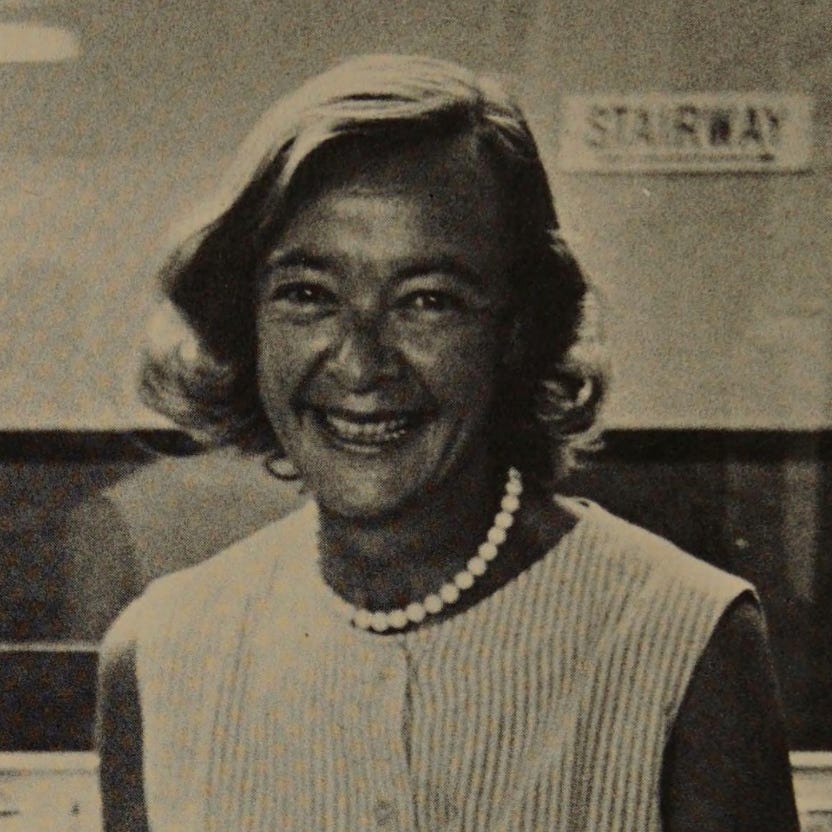
She switched her specialty to psychiatry. And despite her desire to avoid addiction care, she became concerned when she saw patients go “cold turkey” at Bellevue Hospital. So she took her knowledge of withdrawal management from Lexington and wrote an article for the New England Journal of Medicine.
“I thought that once the paper was done, I’d have nothing more to do with addicts. The paper seemed to solve the problem of how to withdraw them, and that was all I knew. But I learned that once you write a paper, you’re an authority.”
During the decade that followed, she became New York’s addiction medicine expert. She approached care with compassion and genuine curiosity. Her practice—filled with Harlem jazz musicians—spurred the rediscovery of a treatment process that had been widely practiced and poorly studied in the early 1900s: the provision of opioids as a treatment for opioid addiction.
Nyswander (alongside her collaborator Vincent Dole) started by providing scheduled doses of morphine to two men who had failed other treatments. But the patients’ activities remained focused on opioid use. So they switched to methadone: a more potent, longer-lasting opioid. When they hit the right dose, the men became productive members of society. They published similar outcomes for 22 patients in 1965 and for 750 patients in 1968.
Nyswander and the pioneers who came after her transformed millions of lives. I won’t argue that methadone and its sister, buprenorphine, are perfect treatments. They’re not. But they’re still some of the most effective medical treatments ever developed.
Our federal Narcotics Farms were shut down in 1975. But they never really went away. They’re now privately run. Aside from labor, the only “treatment” may be Synanon-style attack therapy. Medications are often forbidden, and staff members without medical licenses may recommend discontinuation. The person presenting for care is in a desperate state. And that person doesn’t have the expertise, time, or resources to assess program quality.
Some of these programs do good work. Some need tremendous reform.
We’ve learned a lot since 1945. People with addiction deserve compassionate, transparent, and effective care. Hard work and accountability are important recovery principles. But the accountability goes both ways. Banning life-saving medication is wrong. And dehumanization has no place in addiction care.
(For context: https://www.sltrib.com/news/2026/08/27/they-left-other-side-academy-they/. The picture, quotes and history are summarized from “A Doctor Among the Addicts” by Nat Hentoff.)